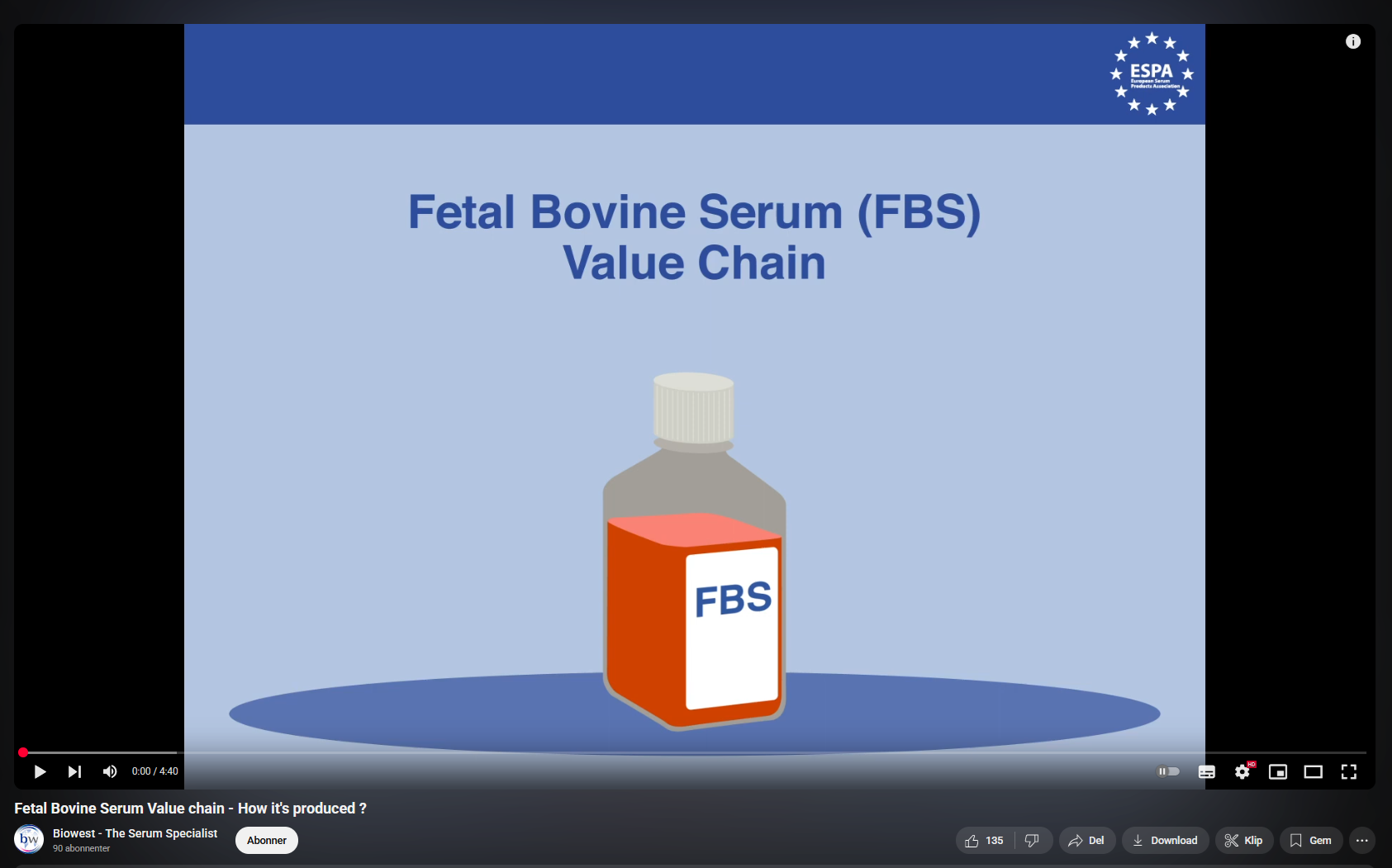
1. From Livestock to Life Sciences: Where It Begins
The production of FBS starts at the slaughterhouse, where the fetuses of pregnant cows, already slaughtered for meat, are identified. These cows are not intentionally bred for FBS collection. Pregnancies are often undetected due to natural breeding or gaps in farm-level diagnostics.
Once identified, blood is collected from the fetus through a sterile, closed-circuit system while it remains unconscious within the uterus. This approach is backed by guidelines from the World Organisation for Animal Health (OIE), which confirm that the fetus does not suffer as long as it remains in utero for a specific period following the mother’s death.
2. Standards and Traceability at Every Step
The video emphasizes the industry’s commitment to quality and accountability:
- Blood is drawn using sterile methods, often in clean-room conditions.
- Labeling and documentation ensure traceability from farm to final batch.
- The raw serum undergoes filtration, typically through triple 0.1 µm filters, and stringent quality control testing for endotoxins, mycoplasma, and viruses.
Traceability is further strengthened by the International Serum Industry Association (ISIA). Their audits ensure that serum is not mislabeled, misrepresented, or diverted from unapproved sources.
3. Ethical Considerations in Focus
Much of the public concern around FBS stems from fears of unethical practices or unnecessary fetal suffering. The video directly addresses this by reaffirming that:
- No fetal blood is taken unless the fetus is confirmed dead or euthanized immediately if exposed to air.
- The serum industry follows international animal welfare standards, including veterinary oversight at every collection site.
- FBS is only collected as a by-product of existing meat production, not through any dedicated breeding program.
The video emphasizes a key ethical argument. Allowing the tissues of deceased fetuses to go unused would be a greater waste, especially when these materials enable scientific and medical advancements.
4. Strategic Supply and Scientific Need
FBS plays a critical role in modern research and biotechnology. It is used in:
- Vaccine and therapeutic development,
- Cell and gene therapy,
- Diagnostic assays,
- Toxicology testing and tissue engineering.
However, supply challenges persist. Global demand continues to rise, while cattle slaughter rates in certain countries have declined. Regional disease outbreaks or trade restrictions, such as BSE or Bluetongue, can also limit serum availability. For this reason, researchers and biotech companies are encouraged to:
- Maintain supply agreements with multiple qualified sources,
- Validate new lots well in advance,
- Stockpile where feasible,
- Explore serum-free or chemically defined media options as long-term alternatives.
This behind-the-scenes look at the FBS supply chain demonstrates an industry that is both aware of public concern and committed to transparency, traceability, and ethical practice. As research institutions, biotech companies, and regulators continue to evaluate sourcing practices, the video serves as an important resource in understanding the balance between scientific progress and animal welfare responsibility.
Source & Credits:
This article is based on the video “Fetal Bovine Serum Value Chain – How it’s produced?” published by the European Serum Products Association.
Watch the original video here: https://www.youtube.com/watch?v=GfRp3IlSTwg